7 Best Generators for CPAP Machines That Work All Night
The best generators for CPAP machines depends on your needs. The Portable Power Station 600W is best for extended runtime with its 288Wh LiFePO4 battery, while the ALLWEI 300W excels at lightweight portability at just 6 pounds. For budget-conscious buyers, the Flashfish 200W stands out with its $87.99 price and reliable 151Wh capacity.
Choosing the right generator ensures your CPAP therapy continues uninterrupted during power outages, camping trips, or travel. The key is matching battery capacity to your CPAP’s power consumption for adequate runtime.
Quick Comparison Table
| Product | Battery Capacity | Weight | AC Output Power | Charging Methods | Runtime (30W CPAP) |
|---|---|---|---|---|---|
| ALLWEI 300W | 280Wh | 6 lbs | 300W | AC, Car, Solar | ~8 hours |
| Enginstar 296Wh | 296Wh | 6.5 lbs | 300W | AC, Car, Solar | ~8.4 hours |
| Flashfish 200W | 151Wh | 4.07 lbs | 200W | AC, Car, Solar | ~4.3 hours |
| 600W LiFePO4 | 288Wh | 8.2 lbs | 350W | AC, Car, Solar | ~8 hours |
Best Generators for CPAP Machines
1. Portable Power Station 600W – Most Reliable for Extended Use
Best for: CPAP users who need consistent power during multi-day camping trips or extended outages.
Key Features:
| Feature | Details |
| Battery Type | LiFePO4 288Wh |
| AC Output | 350W (600W surge) |
| Weight | 8.2 lbs |
| Ports | 2 AC, 1 USB-C, 2 USB-A |
| Charging Options | Solar, car, wall outlet |
The 600W Portable Power Station is the best generator for CPAP users seeking reliable long-term performance. Its LiFePO4 battery technology provides superior longevity and safety compared to standard lithium-ion batteries.
The 288Wh capacity delivers approximately 8 hours of runtime for a typical 30W CPAP machine. This makes it ideal for full-night sleep therapy without interruption.
With 350W continuous output and 600W surge capacity, it handles CPAP machines with heated humidifiers easily. The multiple charging options ensure you can recharge anywhere.
The compact 10 x 6.6 x 8.2-inch design fits easily in luggage or camping gear. Despite its power, it remains portable enough for travel.
This generator represents excellent value for serious CPAP users who refuse to compromise on sleep quality during travel or emergencies.
Pros:
- Long-lasting LiFePO4 battery technology
- 8-hour runtime for 30W CPAP
- High 350W continuous output
- Multiple charging methods
Cons:
- Heavier than smaller models
- Solar panel sold separately
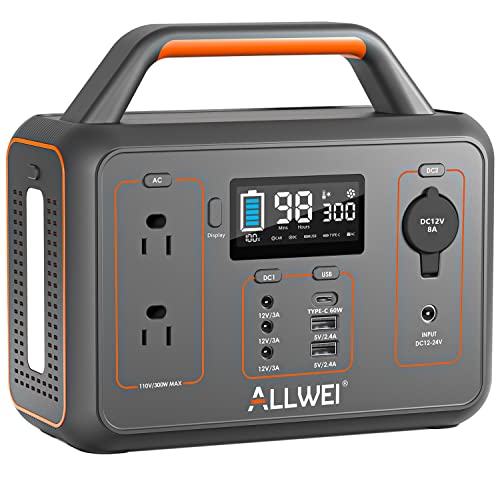
2. ALLWEI Portable Power Station 300W – Best Lightweight Option
Best for: Travelers and backpackers who need portable CPAP power without sacrificing too much capacity.
Key Features:
| Feature | Details |
| Capacity | 280Wh (77,777mAh) |
| AC Output | 300W pure sine wave |
| Weight | 6 lbs |
| Total Ports | 9 output ports |
| LED Light | 3-level with SOS mode |
The ALLWEI 300W is the best lightweight generator for CPAP machines when portability matters most. At just 6 pounds, it’s one of the lightest options with substantial capacity.
The 280Wh battery provides approximately 8 hours of CPAP runtime at 30W consumption. Pure sine wave AC outlets protect sensitive CPAP electronics from power fluctuations.
Nine simultaneous output ports mean you can charge your phone, tablet, and other devices alongside your CPAP. The built-in MPPT controller optimizes solar charging efficiency.
The compact 8.86 x 4.53 x 8.07-inch size fits easily in carry-on luggage. Three charging methods provide flexibility for any situation.
For CPAP users who prioritize portability without drastically reducing runtime, this generator hits the sweet spot.
Pros:
- Lightweight at 6 lbs
- 9 ports power multiple devices
- Built-in LED with SOS mode
- Fast solar charging (3-4 hours)
Cons:
- Lower capacity than larger models
- Requires maintenance charging every 3 months
3. Enginstar Solar Generator 296Wh – Best LCD Display

Best for: Users who want clear power monitoring and slightly longer runtime than budget options.
Key Features:
| Feature | Details |
| Capacity | 296Wh (80,000mAh) |
| Display | Large LCD screen |
| Dimensions | 9 x 5.5 x 7.5 inches |
| Weight | 6.5 lbs |
| Cycle Life | 1000+ charge cycles |
The Enginstar 296Wh is the best generator for CPAP users who value easy power monitoring. Its large LCD display clearly shows remaining battery, input/output status, and charge levels.
With 296Wh capacity, it provides approximately 8.4 hours of runtime for a 30W CPAP. This extra capacity over smaller models ensures you wake up refreshed, not gasping for air.
The pure sine wave AC outlets deliver clean, stable power that won’t damage sensitive CPAP electronics. Seven output ports handle all your devices simultaneously.
Built-in LED lighting with multiple modes adds utility for camping trips. The battery management system protects against common electrical issues.
This generator balances capacity, features, and price effectively for regular CPAP users who travel occasionally.
Pros:
- Large, easy-to-read LCD display
- 296Wh for extended runtime
- 1000+ charge cycle lifespan
- Built-in LED lighting
Cons:
- Solar panel sold separately
- Slightly heavier than ALLWEI
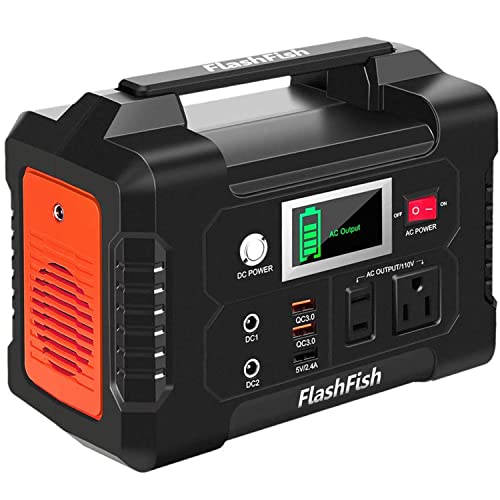
4. Flashfish 200W Portable Power Station – Best Budget Pick

Best for: Budget-conscious CPAP users needing backup power for short outages or weekend trips.
Key Features:
| Feature | Details |
| Capacity | 151Wh (40,800mAh) |
| Price | $87.99 |
| Weight | 4.07 lbs |
| AC Output | 200W (400W peak) |
| USB Ports | 2 QC3.0 + 1 USB |
The Flashfish 200W is the best budget generator for CPAP machines at under $90. Despite its low price, it delivers reliable performance for short-term power needs.
The 151Wh battery provides approximately 4.3 hours of CPAP runtime at 30W. While not enough for a full night, it’s perfect for naps, short outages, or supplementing other power sources.
At just 4.07 pounds, it’s the lightest option reviewed here. The compact design with soft handle makes it incredibly portable for travel.
Separate AC/DC control buttons simplify operation, while the LCD display keeps you informed. Three recharging methods provide flexibility despite the budget price.
For occasional use or as a backup to hotel power, this generator offers unbeatable value.
Pros:
- Extremely affordable at $87.99
- Lightest option at 4.07 lbs
- QC3.0 fast charging ports
- 12-month warranty included
Cons:
- Limited 4.3-hour runtime
- Lower 200W output capacity
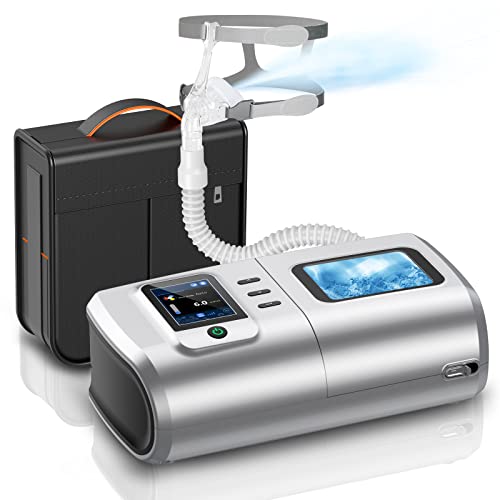
5. REMSTAR Plus CPAP System – Complete CPAP Solution
Best for: Users seeking an all-in-one portable CPAP machine with integrated power management.
Key Features:
| Feature | Details |
| Type | Complete CPAP system |
| Humidifier | Integrated with water tank |
| Included | Mask, tube, travel bag |
| Use Case | Home and travel |
| Design | Single-patient portable unit |
The REMSTAR Plus is the best complete CPAP solution rather than just a generator. It includes everything needed for sleep apnea treatment in one package.
The integrated humidifier with water tank eliminates the need for separate components. This simplifies travel and reduces the number of items to pack.
Designed specifically for obstructive sleep apnea treatment, it delivers precise pressure therapy. The included mask, tubing, and travel bag mean you’re ready to go immediately.
While significantly more expensive at $899, it eliminates the need to purchase CPAP and generator separately. The portable design makes it suitable for both home use and travel.
This is ideal for users who need a complete sleep therapy solution rather than just backup power for an existing CPAP.
Pros:
- Complete all-in-one system
- Integrated humidifier included
- Comes with mask and tubing
- Travel bag for portability
Cons:
- Expensive at $899
- Not a standalone power generator
6. Oxygen Concentrator 1-8L – For Oxygen Therapy Needs
Best for: Users requiring supplemental oxygen therapy rather than CPAP for sleep apnea.
Key Features:
| Feature | Details |
| Flow Rate | 1-8L/min adjustable |
| Oxygen Concentration | 93% at 1-2L/min |
| Noise Level | ≤36dB quiet operation |
| Weight | 14.5 lbs |
| Timer | 0.5-4 hours or 12-hour auto |
The Oxygen Concentrator is the best option for users needing supplemental oxygen rather than CPAP therapy. It generates medical-grade oxygen continuously from ambient air.
Adjustable flow from 1-8L per minute accommodates various oxygen therapy prescriptions. The 93% concentration at lower flows meets medical requirements for most users.
At just 36dB, it operates quietly enough for nighttime use without disturbing sleep. The LED display and touch controls make operation simple, especially for seniors.
The timer function allows scheduled operation or automatic 12-hour shutoff. At 14.5 pounds, it’s portable enough to move between rooms.
This is not a CPAP generator but rather a different medical device for oxygen therapy needs.
Pros:
- Wide 1-8L flow adjustment
- Very quiet at 36dB
- Simple senior-friendly controls
- Continuous flow output
Cons:
- Not a CPAP power solution
- Heavier at 14.5 lbs
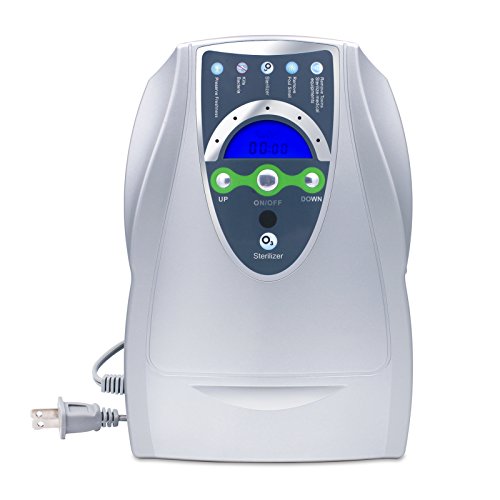
7. WSTA Portable Ozone Generator – For Equipment Sanitization

Best for: CPAP users who want to sanitize their equipment and living spaces.
Key Features:
| Feature | Details |
| Ozone Output | 500mg/h production |
| Timer Settings | 5, 10, 15, 30, 60 minutes |
| Applications | Air, water, surfaces |
| Portability | Small and lightweight |
| Price | $49.99 |
The WSTA Ozone Generator is the best sanitization tool for CPAP equipment rather than a power source. It uses ozone to disinfect masks, tubing, and water chambers.
The 500mg/h ozone production effectively kills bacteria and eliminates odors from CPAP components. Five timer settings from 5 to 60 minutes accommodate different cleaning needs.
Beyond CPAP cleaning, it sanitizes rooms, vehicles, and personal items. The compact, portable design makes it easy to use anywhere.
At just $49.99, it’s an affordable addition to your CPAP maintenance routine. Regular sanitization extends equipment life and improves therapy hygiene.
This is not a power generator but rather a complementary device for maintaining clean CPAP equipment.
Pros:
- Affordable at $49.99
- Effective CPAP sanitization
- Multiple timer settings
- Portable and versatile
Cons:
- Not a power generator
- Requires proper ventilation during use
How to Choose Generators for CPAP Machines
Calculate Your CPAP Power Requirements
Start by checking your CPAP machine’s power consumption, usually listed on the device label in watts. Most CPAP machines use 30-60W without humidification, while heated humidifiers can add 20-40W more.
Multiply your CPAP’s wattage by the hours you sleep to determine required watt-hours. Add 15-20% buffer for efficiency loss to ensure you don’t run out of power mid-sleep.
Battery Capacity and Runtime
Look for generators with at least 200Wh capacity for basic CPAP use without humidification. For heated humidifiers or longer runtime, choose 280-300Wh or higher capacity models.
Calculate expected runtime using this formula: (Battery Wh × 0.85) ÷ Device Watts = Hours. The 0.85 accounts for typical conversion efficiency losses in portable power stations.
Pure Sine Wave Output
Always choose generators with pure sine wave AC output for CPAP machines. Modified sine wave can damage sensitive CPAP electronics and void your warranty.
Pure sine wave provides clean, stable power identical to household electricity. This protects your expensive medical equipment and ensures consistent therapy pressure.
Portability and Weight
Consider where you’ll use the generator most often to determine ideal weight. For backpacking or air travel, prioritize models under 5 pounds even if capacity is slightly lower.
For car camping or home backup, heavier 8-10 pound units with larger capacity make more sense. Balance portability against your actual runtime needs rather than maximizing both.
Charging Options and Speed
Multiple charging methods provide flexibility for different situations. Wall charging is fastest for home use, while solar charging enables off-grid adventures.
Check full recharge times for each method to ensure they fit your schedule. Fast charging under 6 hours means you can recharge during the day while exploring.
Frequently Asked Questions
How long will a 300Wh generator run my CPAP?
A 300Wh generator will run a 30W CPAP for approximately 8.5 hours, or a 50W CPAP with humidifier for about 5 hours. Always add a 20% buffer to ensure you don’t run out during sleep.
Can I use any portable power station for my CPAP?
Only use generators with pure sine wave AC output for CPAP machines. Modified sine wave can damage electronics and void warranties, while pure sine wave provides safe, clean power.
Do I need a generator if I’m just camping for one night?
Yes, if you require CPAP therapy for sleep apnea. Even one night without treatment can cause dangerous oxygen desaturation, so a portable generator ensures uninterrupted therapy anywhere.
Will a generator work with my heated CPAP humidifier?
Most generators in the 300W+ range can power heated humidifiers, but they significantly reduce runtime. Consider using your CPAP without heat or choose a larger capacity generator for full-night operation.
How often should I recharge my CPAP generator?
Recharge after each use and maintain stored generators by charging every 2-3 months. This prevents battery degradation and ensures your generator is ready for emergencies.
Final Thoughts
The Portable Power Station 600W offers the best overall value with its reliable LiFePO4 battery and 8-hour runtime for most CPAP users. For budget-conscious buyers, the Flashfish 200W provides essential backup power at under $90.
Choose capacity based on your actual CPAP wattage and whether you use heated humidification. Pure sine wave output and multiple charging options are non-negotiable features for reliable CPAP power.
Don’t let power concerns interrupt your sleep therapy—invest in a quality generator that matches your specific needs and usage patterns.