5 Best Small Generators for RVs You Need Now
The best small generators for RVs depends on your needs. The PowerSmart 4400-Watt Inverter Generator is best for budget-conscious RVers needing reliable power and long runtime, while the WEN DF360iX excels at fuel flexibility with its dual-fuel design. For those seeking quiet, fume-free power, the EcoFlow DELTA 3 Classic stands out with its portable power station design and ultra-fast charging.
Choosing the right generator for your RV means balancing power output, portability, and noise levels. Whether you need a traditional gas-powered unit or a modern battery-powered station, the options below cover every camping style and budget.
Quick Comparison Table
| Product | Peak Watts | Runtime at 25% Load | Weight | Noise Level | Fuel Type |
|---|---|---|---|---|---|
| PowerSmart 4400W Inverter | 4400W | 11 hours | 61.29 lbs | 76 dB | Gasoline |
| Oxseryn 4000W Inverter | 4000W | 14 hours | 56 lbs | 72 dB | Gasoline |
| WEN DF360iX Dual Fuel | 3600W | N/A | N/A | Very Quiet | Gas/Propane |
| EcoFlow DELTA 2 | 1800W | N/A (Battery) | N/A | Silent | Battery/Solar |
| EcoFlow DELTA 3 Classic | 1800W | N/A (Battery) | N/A | Silent | Battery/Solar |
Best Small Generators for RVs
1. PowerSmart 4400-Watt Portable Inverter Generator – Best Budget Option with Long Runtime

Best for: RVers seeking maximum power output and extended runtime without breaking the bank.
Key Features:
| Feature | Details |
| Power Output | 4400W peak, 3600W rated |
| Runtime | 11 hours at 25% load |
| Fuel Tank | 1.6 gallons |
| Noise Level | 76 dB at 23 feet |
| Safety Features | CO sensor, overload protection |
The PowerSmart 4400-Watt Inverter Generator is the best choice for RVers needing serious power at an affordable price. At just $289, it delivers exceptional value with enough wattage to run multiple appliances simultaneously.
Built with a reliable 223cc EPA-compliant engine, this generator handles everything from air conditioners to microwaves. The inverter technology produces clean power that’s safe for sensitive electronics like laptops and phones.
With an impressive 11-hour runtime on a single tank, you won’t be refueling constantly during your camping trips. The 1.6-gallon fuel tank strikes a perfect balance between portability and endurance.
Safety features include carbon monoxide detection, low oil shutdown, and overload protection. At 61 pounds, it’s manageable for most adults to lift into an RV storage compartment.
The 76 dB noise level is reasonable for a generator this powerful, though it’s not whisper-quiet. For the price and performance, this is an outstanding entry-level RV generator.
Pros:
- Excellent value under $300
- High 4400W peak output
- 11-hour runtime
- CO sensor included
Cons:
- Heavier than some competitors
- Louder than premium models
2. Oxseryn 4000W Inverter Generator – Quietest Gas-Powered Option

Best for: RV campers who prioritize quiet operation and extended runtime in campgrounds with noise restrictions.
Key Features:
| Feature | Details |
| Power Output | 4000W peak, 3200W running |
| Runtime | 14 hours at 25% load |
| Fuel Tank | 2 gallons with gauge |
| Noise Level | 72 dB at 23 feet |
| Weight | Only 56 lbs |
The Oxseryn 4000W Generator stands out as the quietest gas-powered option at just 72 dB. This makes it perfect for campgrounds where noise levels matter and you want to be a good neighbor.
Powered by a reliable 208cc engine, it delivers 4000 peak watts with inverter technology for clean power. The open frame design aids cooling while maintaining surprisingly low noise levels.
The 14-hour runtime at 25% load is the longest in this roundup, thanks to the 2-gallon fuel tank with a convenient gauge. You can check fuel levels at a glance without stopping your activities.
At only 56 pounds, this is the lightest gas generator reviewed here. Multiple output options include two 120V AC ports, a 12V DC port, and a dedicated RV port.
The ECO mode automatically adjusts engine speed to match power demand, saving fuel and reducing noise even further. For quiet, efficient RV power, this is hard to beat.
Pros:
- Quietest at 72 dB
- Longest 14-hour runtime
- Lightest at 56 lbs
- Fuel gauge included
Cons:
- Slightly lower peak wattage
- Open frame less protective
3. WEN DF360iX Dual Fuel Inverter Generator – Most Versatile Fuel Options

Best for: RVers who want fuel flexibility and the ability to switch between gasoline and propane based on availability.
Key Features:
| Feature | Details |
| Dual Fuel | Gas and propane compatible |
| Gas Power | 3600W peak, 2900W rated |
| Propane Power | 3500W peak, 2600W rated |
| Noise Level | Extremely quiet operation |
| Warranty | Three years |
The WEN DF360iX is the only dual-fuel generator in this roundup, giving you unmatched flexibility. Switch between gasoline and propane depending on what’s available or more affordable at your location.
Running on gasoline delivers 3600 surge watts and 2900 running watts, while propane provides 3500 surge and 2600 running watts. The tool-free LPG quick-connector makes switching fuels incredibly easy.
WEN’s inverter technology produces clean power safe for all your sensitive electronics. The extremely quiet operation makes this comparable to normal conversation levels according to health standards.
Safety is paramount with the WEN Watchdog CO sensor that automatically shuts down the generator if dangerous carbon monoxide levels are detected. The fuel shut-off feature simplifies maintenance between uses.
With two 120V outlets, an RV receptacle, 12V DC port, two USB ports, and a three-year warranty, this is a complete package. The premium features justify the higher price point.
Pros:
- Dual fuel flexibility
- Extremely quiet operation
- Three-year warranty
- CO Watchdog sensor
Cons:
- Higher price point
- Lower wattage than others
4. EcoFlow DELTA 2 Portable Power Station – Best Battery-Powered Alternative

Best for: RVers who want zero-emission, silent power with the option to expand capacity and recharge with solar panels.
Key Features:
| Feature | Details |
| Capacity | 1024Wh expandable to 3kWh |
| AC Output | 1800W continuous power |
| Charging Speed | 0-80% in 50 minutes |
| Solar Input | Up to 500W |
| Battery Life | 3000+ cycles |
The EcoFlow DELTA 2 represents a completely different approach to RV power with its battery-powered design. No gas, no fumes, no noise—just clean, reliable electricity whenever you need it.
With 1024Wh capacity and 1800W output, it powers 90% of appliances through 15 different outlets. The LiFePO4 battery chemistry provides 3000+ charge cycles, meaning this unit will last for years of regular use.
The charging speed is phenomenal—0 to 80% in just 50 minutes from a wall outlet. This makes it practical for quick turnarounds between camping trips or emergency backup power at home.
Solar charging capability up to 500W means you can stay off-grid indefinitely with the right solar panel setup. The capacity expands up to 3kWh with additional batteries for extended trips.
While it can’t match the sustained runtime of gas generators, the convenience and eco-friendliness make it ideal for weekend warriors and environmentally conscious campers.
Pros:
- Completely silent operation
- Zero emissions
- Ultra-fast 50-minute charging
- Expandable capacity
Cons:
- Limited runtime vs gas
- Requires recharging infrastructure
5. EcoFlow DELTA 3 Classic Portable Power Station – Fastest Charging Power Station
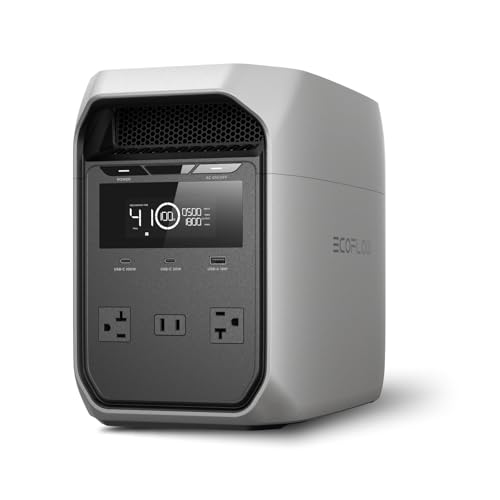
Best for: RVers needing UPS backup for sensitive electronics and the fastest possible recharge times between uses.
Key Features:
| Feature | Details |
| Capacity | 1024Wh LiFePO4 battery |
| Output | 1800W, 3600W surge |
| Charging | 0-80% in 45 minutes |
| UPS Function | Under 10ms switchover |
| Battery Life | 10+ years daily use |
The EcoFlow DELTA 3 Classic is the newest generation power station with even faster charging than its predecessor. The 45-minute charge time from 0-80% is the quickest in this category.
The 1800W continuous output with 3600W surge handles heavy loads through X-Boost technology. This means you can power larger appliances that typically require more wattage than the rated output.
The under-10ms UPS function automatically switches to battery power during outages, protecting sensitive electronics like computers and medical devices. This feature is crucial for anyone working remotely from their RV.
Built with EV-grade battery cells rated for 10+ years of daily use, this is a long-term investment. The sophisticated Battery Management System ensures safe operation in any conditions.
Solar recharging takes just 2.5 hours with a 500W panel, making this perfect for extended off-grid adventures. At the same $399 price as the DELTA 2, the faster charging makes it the better current choice.
Pros:
- Fastest 45-minute charging
- UPS function under 10ms
- 10+ year battery life
- X-Boost technology
Cons:
- Battery capacity limits
- Higher upfront cost
How to Choose Small Generators for RVs
Power Output Requirements
Calculate your total wattage needs before buying any generator. Add up the running watts of all appliances you’ll use simultaneously, then add 20% for surge capacity.
Most RV air conditioners need 2000-3000 watts, while microwaves require 1000-1500 watts. A 3000-4000 watt generator handles most RV needs comfortably without maxing out the system.
Fuel Type and Availability
Gasoline generators offer the highest power output and longest runtimes but require fuel storage and produce emissions. They’re best for frequent use and extended off-grid camping.
Battery-powered stations eliminate fumes and noise but need recharging infrastructure. Dual-fuel models provide flexibility to switch between gasoline and propane based on availability and cost.
Noise Level Considerations
Many campgrounds enforce strict noise limits, typically 60-70 dB during quiet hours. Check your generator’s decibel rating at 23 feet, which is the standard measurement distance.
Inverter generators run significantly quieter than conventional models. Battery power stations operate silently, making them ideal for crowded campgrounds or noise-sensitive areas.
Portability and Weight
Consider how often you’ll move the generator and available storage space in your RV. Units under 60 pounds are manageable for most adults, while heavier models may require two people.
Compact designs with built-in handles make transportation easier. Measure your RV storage compartment before purchasing to ensure the generator fits properly.
Runtime and Fuel Efficiency
Longer runtime means fewer refueling interruptions during your camping trip. Look for generators offering 10+ hours at 25% load for overnight operation.
ECO mode automatically adjusts engine speed to match power demand, extending runtime and reducing fuel consumption. Battery stations require different thinking—focus on watt-hour capacity and recharge options instead.
Frequently Asked Questions
What size generator do I need for a 30-amp RV?
A 3000-4000 watt generator typically handles 30-amp RV needs, including air conditioning, refrigerator, and basic appliances. Calculate your specific power requirements by adding up all devices you’ll run simultaneously.
Are inverter generators better for RVs than conventional generators?
Yes, inverter generators produce cleaner power safe for sensitive electronics, run quieter, and offer better fuel efficiency. They cost more upfront but provide superior performance for RV applications.
Can I run my RV air conditioner on a portable generator?
Most RV air conditioners require 2000-3000 starting watts and 1500-2000 running watts. A generator rated for 3000+ watts handles a single AC unit comfortably.
How long do battery-powered generators last on a single charge?
Runtime depends on what you’re powering—a 1000Wh battery station running a 100W device lasts about 10 hours. Heavy loads like air conditioners drain batteries much faster, typically 1-2 hours.
Do I need a special outlet for connecting a generator to my RV?
Most RVs use either a TT-30R (30-amp) or 14-50R (50-amp) receptacle. Ensure your generator has the matching outlet or purchase an appropriate adapter for compatibility.
Final Thoughts
The PowerSmart 4400W offers the best value for budget-conscious RVers, while the WEN DF360iX provides unmatched fuel flexibility. For silent, eco-friendly power, the EcoFlow DELTA 3 Classic delivers the fastest charging and cleanest operation.
Consider your camping style, power needs, and budget when choosing. Gas generators excel for extended off-grid trips, while battery stations suit weekend warriors and noise-restricted campgrounds.
Whichever you choose, proper sizing and quality construction ensure reliable power for all your RV adventures.