5 Best Solar Generators for Home Backup Power
The best solar generators for home depends on your needs. The Jackery HomePower 3000 is best for whole-home backup with its 3600W output and UPS function, while the OUPES Mega 1 excels at budget-conscious buyers seeking expandable capacity. For maximum power and flexibility, the EF ECOFLOW DELTA Pro stands out with its 3600Wh capacity and five charging methods.
Choosing the right solar generator means balancing power capacity, output wattage, and your budget. Whether you need emergency backup during outages or off-grid power for your RV, these five options cover everything from compact portable units to whole-home systems.
Quick Comparison Table
| Product | Battery Capacity | AC Output Power | UPS Function | Solar Input | Battery Type |
|---|---|---|---|---|---|
| Jackery HomePower 3000 | 3072Wh | 3600W (7200W surge) | Yes (≤20ms) | 400W max | LiFePO4 |
| ZeroKor 300W Solar Generator | 280Wh | 300W | No | 60W (included) | Lithium-ion |
| PowerSmart 4400W Generator | 1.6 gal fuel tank | 3600W (4400W starting) | No | N/A (gas powered) | Gas engine |
| OUPES Mega 1 | 1024Wh (expandable to 5120Wh) | 2000W (4500W surge) | Yes (<20ms) | 800W max | LiFePO4 |
| EF ECOFLOW DELTA Pro | 3600Wh (expandable to 25kWh) | 3600W (4500W with X-Boost) | No | 1600W max | LiFePO4 |
Best Solar Generators for Home
1. Jackery HomePower 3000 – Best Overall Home Backup System

Best for: Homeowners seeking reliable whole-home backup power with seamless UPS switching during outages.
Key Features:
| Feature | Details |
| Battery Capacity | 3072Wh LiFePO4 battery |
| AC Output | 3600W (7200W surge) |
| UPS Function | ≤20ms seamless switching |
| Solar Panels | 2x 200W panels included |
| Recharge Time | 1.7 hours hybrid charging |
The Jackery HomePower 3000 is the best solar generator for homeowners who need reliable backup power during emergencies. With its massive 3600W output, it can power your fridge, WiFi router, lights, and other essentials for up to 15 hours.
The UL-certified UPS function switches power in under 20 milliseconds, keeping critical devices like security cameras and medical equipment running without interruption. This makes it ideal for storm season and unexpected outages.
You get two 200W solar panels included, and the system fully recharges in just 1.7 hours using hybrid AC and DC charging. The LiFePO4 battery provides long-lasting durability with thousands of charge cycles.
Multiple output ports including a built-in TT-30 RV port make this versatile for both home and outdoor use. The fast recharge times mean you’re never without power for long.
While it’s a significant investment, the 30% federal tax credit eligibility helps offset the cost, making it more affordable than it appears.
Pros:
- Ultra-fast UPS switching under 20ms
- Massive 3600W output powers most appliances
- Solar panels included in package
- Eligible for 30% tax credit
Cons:
- Higher price point at $1499
- Heavy and less portable
2. ZeroKor 300W Solar Generator – Best Budget Entry-Level Option

Best for: Campers and first-time buyers needing basic portable power for small devices and camping gear.
Key Features:
| Feature | Details |
| Battery Capacity | 280Wh lithium-ion battery |
| AC Output | 300W pure sine wave |
| Solar Panel | 60W foldable panel included |
| Conversion Efficiency | 20.5% monocrystalline |
| Safety Features | Built-in BMS protection |
The ZeroKor 300W Solar Generator is the best budget-friendly option for anyone starting with solar power. At just $229.98, it includes a 60W foldable solar panel, making it a complete package for camping trips.
This compact unit handles smartphones, tablets, laptops, and other small camping supplies with ease. The 280Wh capacity won’t power your whole home, but it’s perfect for weekend outdoor adventures.
You get multiple charging outlets including two AC outlets, three USB ports, one quick charge port, and a DC port. The built-in flashlight with SOS mode adds safety for nighttime camping.
The BMS protection system includes short circuit, over-current, over-voltage, and overheating protection. A cooling fan automatically manages temperature during use.
Just remember this isn’t designed for high-power appliances like coffee makers or hair dryers, which can damage the unit.
Pros:
- Extremely affordable at $229.98
- Solar panel included in package
- Lightweight and portable design
- SOS flashlight for emergencies
Cons:
- Limited 280Wh capacity
- Cannot power high-wattage appliances
3. PowerSmart 4400W Gas Generator – Best for Extended Power Outages

Best for: Homeowners who need maximum runtime and don’t mind gas-powered operation during long outages.
Key Features:
| Feature | Details |
| Power Output | 3600W rated, 4400W starting |
| Fuel Tank | 1.6 gallons |
| Runtime | 11 hours at 25% load |
| Noise Level | 76 dB at 23 feet |
| Weight | 61.29 lbs |
The PowerSmart 4400W Generator is the best gas-powered option for homeowners needing reliable backup during extended outages. With 11 hours of runtime on a single tank, you won’t constantly refuel during emergencies.
This EPA-compliant inverter generator delivers clean power suitable for sensitive electronics. The 223cc 4-stroke engine provides 3600W continuous power with 4400W starting capacity for high-demand appliances.
Safety features include carbon monoxide detection, low oil shutdown, and overload protection. These critical safeguards protect both you and your equipment during operation.
At 76 dB from 23 feet away, it’s quieter than traditional generators, making it suitable for residential areas. The compact design and 61-pound weight make it reasonably portable.
While it’s not solar-powered, the affordable $289.47 price and long runtime make it practical for areas with frequent extended outages.
Pros:
- Impressive 11-hour runtime
- High 4400W starting power
- CO sensor for safety
- Very affordable at $289.47
Cons:
- Requires gasoline fuel
- Not solar-powered
4. OUPES Mega 1 Solar Generator – Best Value with Expandability

Best for: Budget-conscious buyers who want expandable capacity and fast charging at an affordable price.
Key Features:
| Feature | Details |
| Battery Capacity | 1024Wh (expandable to 5120Wh) |
| AC Output | 2000W (4500W surge) |
| Fast Charge | 36 minutes to 80% |
| Solar Panel | 100W panel included |
| UPS Function | Yes (<20ms) |
The OUPES Mega 1 is the best value solar generator, offering premium features at a mid-range $529 price. The industry-leading 36-minute fast charge from 0-80% means minimal downtime during emergencies.
Starting with 1024Wh capacity, you can expand to a massive 5120Wh by adding extra batteries. This flexibility lets you start small and grow your system as needs and budget allow.
The 2000W pure sine wave output with 4500W surge handles heavy-duty appliances like microwaves, power tools, and mini-fridges. The included 100W solar panel gets you started with solar charging immediately.
Smart app control via Bluetooth and WiFi lets you monitor and control everything remotely. The UPS function provides seamless backup power for critical devices during outages.
The LiFePO4 battery technology ensures long lifespan and reliability, making this an excellent investment for growing power needs.
Pros:
- Industry-leading 36-minute fast charge
- Expandable to 5120Wh capacity
- Solar panel included
- App control with WiFi/Bluetooth
Cons:
- Extra batteries sold separately
- Smaller initial 1024Wh capacity
5. EF ECOFLOW DELTA Pro – Best for Maximum Power and Flexibility
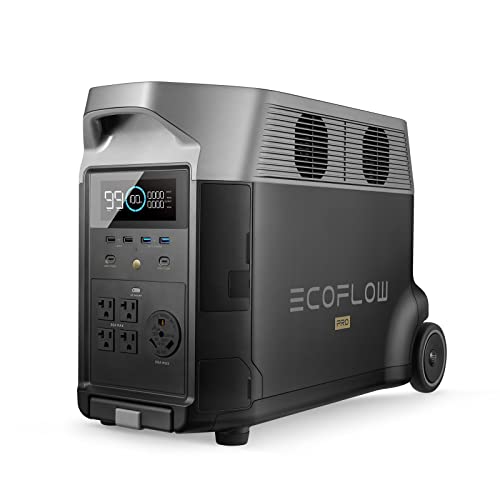
Best for: Power users needing maximum capacity, output flexibility, and the ability to power entire homes or workshops.
Key Features:
| Feature | Details |
| Battery Capacity | 3600Wh (expandable to 25kWh) |
| AC Output | 3600W (7200W paired) |
| X-Boost Technology | Up to 4500W output |
| Output Ports | 15 different ports |
| Fast Charge | 1.8 hours with 240V |
The EF ECOFLOW DELTA Pro is the best solar generator for maximum power and flexibility, offering professional-grade capabilities at $1399. The 3600Wh capacity expands to an incredible 25kWh with additional batteries.
With 3600W AC output expandable to 7200W by pairing two units, this powers 99.99% of heavy-duty devices. X-Boost technology pushes output to 4500W for demanding appliances.
The 15 different output methods include five AC outlets, two USB-C ports at 100W each, USB-A ports, DC outlets, car power, and Anderson port. This versatility handles any device combination simultaneously.
X-Stream fast charging fully recharges in just 1.8 hours with 240V outlets or 2.7 hours with standard outlets. Solar charging takes 2.8 hours with four 400W panels at 23% efficiency.
Five charging methods including EV stations make this incredibly flexible. The 30% tax credit eligibility makes this premium system more affordable for qualified buyers.
Pros:
- Massive 3600Wh expandable to 25kWh
- 15 different output ports
- Ultra-fast 1.8-hour recharge
- Eligible for 30% tax credit
Cons:
- Premium price at $1399
- Solar panels sold separately
How to Choose Best Solar Generators for Home
Battery Capacity and Runtime
Battery capacity measured in watt-hours (Wh) determines how long your generator can power devices. A 1000Wh battery running a 100W device lasts about 10 hours.
Calculate your essential devices’ total wattage and multiply by desired runtime hours. For whole-home backup, look for 2000Wh minimum, while camping needs might only require 300-500Wh.
Power Output and Surge Capacity
Continuous power output (measured in watts) must exceed your devices’ combined running wattage. Surge capacity handles the initial power spike when appliances start up.
Refrigerators, power tools, and air conditioners need high surge ratings, often 2-3 times their running wattage. Check both continuous and surge ratings before buying.
Recharge Speed and Methods
Fast recharge times minimize downtime during emergencies. Look for AC charging under 3 hours and solar charging capabilities for off-grid independence.
Multiple charging options including wall outlets, solar panels, car chargers, and generators provide flexibility. Hybrid charging combining AC and solar offers the fastest recharge times.
Battery Chemistry and Lifespan
LiFePO4 (lithium iron phosphate) batteries last 3000-6000 cycles compared to 500-1000 for standard lithium-ion. They’re safer, more stable, and better for long-term investment.
While LiFePO4 costs more upfront, the longer lifespan and better performance in extreme temperatures make them worth the premium for home backup systems.
UPS Function and Portability
Uninterruptible Power Supply (UPS) function switches power in milliseconds during outages, keeping sensitive electronics running without interruption. This matters for medical equipment, security systems, and work computers.
Consider weight and size if you’ll move the generator frequently. Units over 50 pounds work better as stationary backup, while camping generators should stay under 30 pounds for easy transport.
Frequently Asked Questions
How long will a solar generator power my refrigerator?
A 3000Wh solar generator typically powers a standard refrigerator for 24-48 hours depending on efficiency and usage. Smaller 1000Wh units provide 8-12 hours of fridge power.
Can solar generators work during cloudy weather?
Yes, solar panels still generate power on cloudy days but at reduced efficiency, typically 10-25% of full capacity. You can also recharge via AC outlets when solar input is insufficient.
Are solar generators eligible for tax credits?
Many solar generators qualify for the 30% federal Residential Clean Energy Credit if they meet specific requirements. Check with your utility provider and tax advisor to verify eligibility for your specific model.
How many solar panels do I need for my generator?
Match solar panel wattage to your generator’s maximum solar input rating. A generator with 800W max solar input works best with 600-800W of panels for optimal charging speed.
Can I run my whole house on a solar generator?
Solar generators with 3000W+ output and 3000Wh+ capacity can power essential home circuits including refrigerator, lights, WiFi, and small appliances. Whole-home power requires 5000W+ systems or pairing multiple units.
Final Thoughts
The Jackery HomePower 3000 offers the best overall combination of power, capacity, and UPS functionality for serious home backup needs.
Budget buyers should consider the OUPES Mega 1 for its expandability and fast charging, while the ZeroKor suits basic camping needs. Focus on battery capacity matching your runtime needs and output wattage exceeding your device requirements.
Choose LiFePO4 battery chemistry for longevity, and verify tax credit eligibility to maximize your investment value.